Audio Branding Trends For 2026
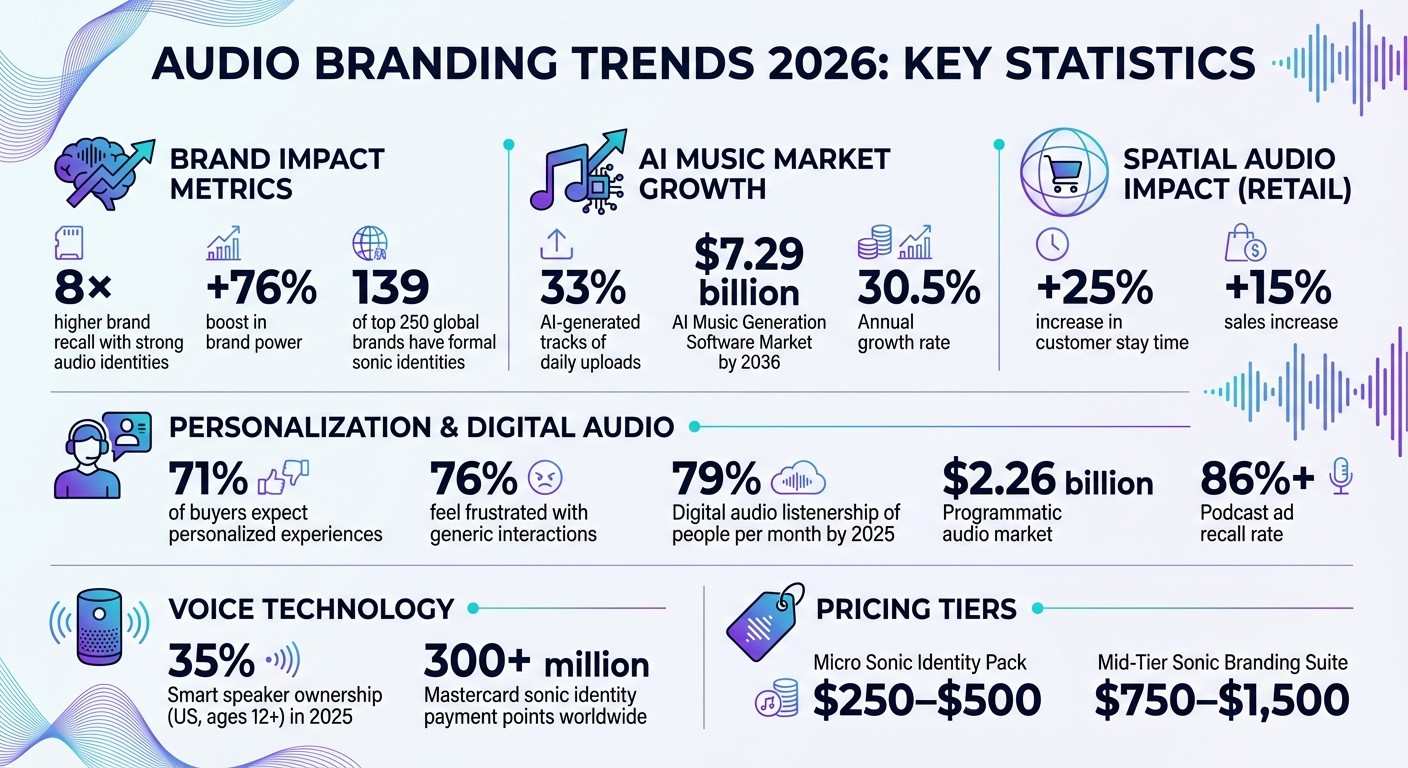
How a brand sounds is now as important as how it looks. By 2026, audio branding has evolved far beyond jingles, encompassing sonic logos, musical DNA, UX sound palettes, and even personalized audio experiences. Why does this matter? Brands with strong audio identities enjoy 8× higher recall and a +76% boost in brand power.
Key trends shaping the space include:
AI in Sound Design: AI tools make high-quality, custom audio affordable, with AI-generated tracks now accounting for a third of daily uploads.
Spatial Audio: Immersive, 360° soundscapes boost engagement, increasing customer stay time by 25% and sales by 15%.
Personalized Audio: Real-time audio adapts to listener context, like upbeat tracks for workouts or calming tones during rainy evenings.
Human + AI Balance: While AI scales production, human creativity drives emotional connection and storytelling.
Data-Driven Sound: Brands test and refine audio using tools that analyze emotional resonance and performance metrics.
The shift from static jingles to flexible sonic systems ensures brands stay recognizable across platforms, from smart speakers to retail spaces. With AI advancing and screenless devices growing, the future of branding is all about being heard - and felt.
Audio Branding Statistics and Market Growth 2026
Best Audio Brands 2026: Letter Grade System
Understanding how sound can build brands is essential for implementing these grading standards effectively.
New Technologies Shaping Audio Branding
Technology is changing the way brands approach sound. Three key advancements are leading this shift: AI-powered production tools, spatial audio experiences, and real-time personalization systems. These innovations help brands stand out while expanding their sonic reach.
AI-Powered Sound Design
AI-generated music is no longer just about quantity - it’s about precision. In fact, AI-driven tracks now make up a third of daily uploads, and the AI Music Generation Software Market is expected to hit $7.29 billion by 2036, with a projected growth rate of 30.5% annually.
The real game-changer is how AI tools can reflect a brand’s personality and mood. For example, an eco-conscious company might request natural soundscapes, while a fintech brand could go for sleek, digital tones. This approach creates what’s called "Sonic DNA": a brand’s core musical identity that can be consistently applied across all platforms. As Jack Righteous puts it:
"Sonic Branding behaves like a service market, not a lottery market. That fits organic creators".
AI tools simplify production by automating tasks like theme creation, instrument selection, and rhythm management. This opens the door for smaller brands to access high-quality, legally compliant audio that rivals major productions - without the hefty studio costs. For instance, a Micro Sonic Identity Pack (one theme and three variations) costs around $250–$500, while a Mid-Tier Sonic Branding Suite is priced between $750–$1,500.
Brands are also focusing on building micro-catalogs - 8 to 12 professional tracks in a cohesive style, like ambient or cinematic trap. This focused approach builds trust and recognition. To navigate stricter platform rules, companies are maintaining proof kits, which document AI-generated assets, including prompts and settings.
While AI refines a brand’s sonic identity, spatial audio takes the experience to the next level.
Spatial and Immersive Audio
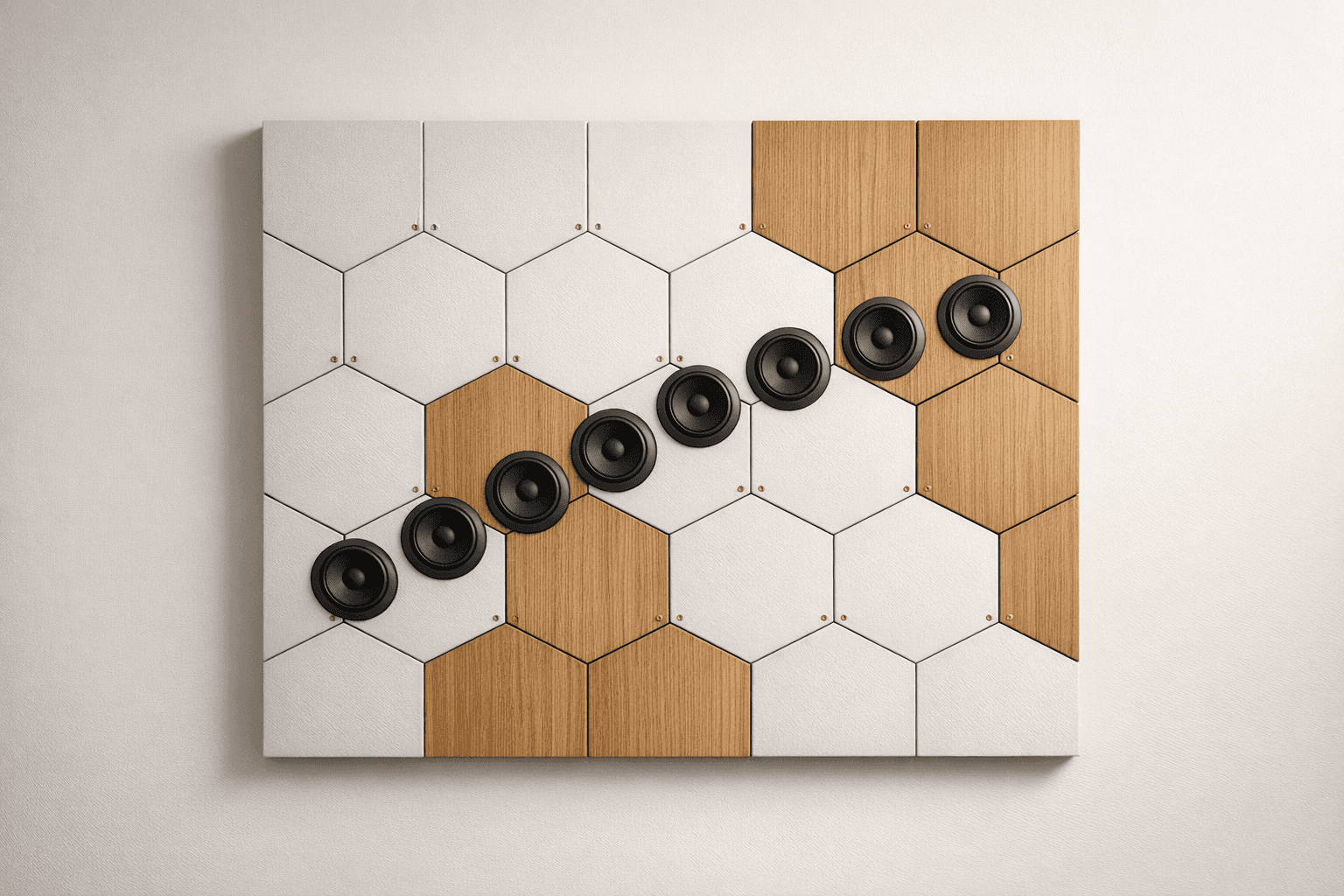
Spatial audio creates a three-dimensional sound environment, placing listeners in a "360° sonic envelope". This transforms sound from a passive experience to one where people feel immersed, as if they’re inside the soundscape.
The benefits are clear. In retail settings, combining spatial audio with dynamic lighting has boosted customer stay time by 25% and increased sales by nearly 15%. Spatial audio works in two ways: static audio, which stays anchored to the listener, and head-tracked audio, which changes with the listener’s movements.
This is made possible through object-based mixing, where each sound is treated as an individual object with specific 3D coordinates. Advanced systems like L-Acoustics L-ISA, d&b Soundscape, and HOLOPLOT make this precision possible. Unlike traditional stereo, which delivers sound from a fixed point, spatial audio surrounds the listener, creating a fully immersive experience.
Smaller brands can start with simple setups, like adding surround speakers, before investing in full 360° systems. The key is subtlety - audiences prefer natural, seamless immersion rather than constant, distracting sound movement. Proper calibration is also essential, as poorly aligned systems can ruin the experience. Hiring specialists to design and fine-tune the soundscape ensures quality.
Building on immersive audio, real-time personalization brings a whole new level of engagement.
Programmatic Audio Personalization
Advances in AI and spatial audio have paved the way for real-time personalization, allowing brands to deliver tailored sound experiences. This goes far beyond basic targeting. With Dynamic Creative Optimization (DCO), a single audio file can generate thousands of variations, adapting to different audiences and scenarios without requiring separate recordings.
The precision of this approach is impressive. For instance, a campaign can target specific job roles: a CFO might hear ROI-focused messaging during a commute, while an IT Director hears technical details - all from the same base audio. Context-aware personalization can even adjust elements like background music or voice tone based on real-time data. Think upbeat tracks for sunny mornings, calming tunes for rainy evenings, or high-energy music when a wearable device detects the listener is exercising.
This matters because 71% of buyers expect personalized experiences, and 76% feel frustrated when interactions seem generic. With digital audio listenership projected to reach 79% of people per month by 2025, the programmatic audio market is set to grow to $2.26 billion. Podcast advertising alone boasts an ad recall rate of over 86%, outperforming many other formats.
To make this work, brands need modular sonic systems. These combine a human-composed core track with AI-driven variations to ensure consistency across personalized ads and social media posts. Michele Arnese, CEO of amp sound branding, explains:
"AI is not the composer - it is the production assistant. We are entering the era of 'Modular Sonic Systems,' where the human spirit creates the core track, and the machine simply scales it".
Changing Sound Design Preferences
As AI-generated music takes up a growing share of the market - making up one-third of daily uploads on major platforms by 2026 - audiences are leaning toward music that feels more human and emotionally authentic. This shift is encouraging brands to embrace simpler, more emotionally resonant soundscapes.
Studies reveal that audience engagement drops sharply when a human composer isn’t involved. Stephen Arnold Music captures this sentiment perfectly:
"The value isn't in the perfection of the music - it's in the relatability and shared emotion of the artist".
This trend is fueling a move away from isolated jingles toward more adaptable sonic systems. These systems often start with a simple, memorable sound that can be expanded across various platforms, from app notifications to podcasts and even in-store environments, all while staying recognizable. For example, Netflix has evolved its iconic "tudum" sound into multiple contexts, while Mastercard has extended its sonic identity across over 300 million payment points worldwide.
With the rise of screenless devices - like smart speakers, wearables, and other IoT gadgets - brands need to be instantly identifiable through sound alone. Clean, straightforward audio signatures tend to resonate better across these fragmented touchpoints than overly complex compositions. This growing emphasis on authenticity is driving brands to create soundscapes that feel more personal and relatable.
Textural and Minimalist Soundscapes
In response to this demand for genuine sound, many brands are turning to hand-crafted, textural audio created with real instruments like pianos and treated percussion. This approach delivers a "felt, not faked" cinematic quality.
Take AppleTV, for instance. In January 2026, it unveiled a new sonic identity composed by Grammy-winning artist Finneas. The logo was intentionally crafted using pianos, synths, and percussion, with no reliance on "CG shortcuts." TBWA Media Arts Lab explained:
"Every shimmer was made for real, no CG shortcuts, a nod to Apple's belief that craft should be felt, not faked".
Meanwhile, Coca-Cola introduced "Coke SoundZ", an AI-powered instrument that lets fans compose music using organic brand sounds - like the crisp pop of a bottle opening and the fizz of carbonation. This project blended AI’s efficiency with the tactile, physical textures of real-world sounds.
These textured soundscapes act as an "emotional shortcut" to convey brand values, often resonating with audiences faster than visuals can. For example, eco-fashion brands are using natural ambient sounds to communicate their commitment to sustainability. The secret lies in avoiding overproduction and focusing on simple, emotionally rich textures that connect on a deeper level.
Balancing AI Efficiency with Human Authenticity
The challenge in 2026 isn’t about choosing between AI and human creativity - it’s about finding the right mix. While AI excels at technical tasks like generating variations or alternate edits, the human touch remains vital for conceptual work and storytelling that creates emotional resonance. This balance, often referred to as creative automation, allows brands to scale efficiently without losing their emotional impact.
As Vox notes:
"Today's AI models are liable to exclude vast swaths of music... They are more likely to produce stereotypical sounds within a genre or style than they are to produce anything peculiar, let alone innovative or interesting".
Brands that prioritize ethical AI practices - using artist-trained models and ensuring transparent compensation - are earning greater consumer trust. Stephen Arnold Music’s Russell Boiarsky and Chad Cook sum it up well:
"In 2026, being heard will capture attention - being felt will set brands apart".
The winning strategy combines AI’s technical precision with human creativity to leave an emotional imprint. This approach helps brands stand out in a sea of generic, AI-generated audio while delivering the authenticity that modern audiences crave.
Data-Driven Audio Branding
With AI personalization on the rise, brands are leaning heavily on data to perfect their sonic identities. Gone are the days of relying on instinct or gut feelings to choose the right sound. In 2026, brands are adopting data-driven approaches to refine every aspect of their audio branding. Tools like SoundOut allow teams to analyze compositions against over 220 specific emotional attributes, ensuring that every sound aligns seamlessly with their brand identity and audience expectations. According to Stephen Arnold Music:
"These tools allow teams to quickly test compositions and selections against specific emotional attributes, shifting away from intuition-based decision-making toward more predictable data-backed processes".
But it’s not just about emotional resonance. Brands are also testing how their audio performs in different real-world settings. Using contextual prototyping, they ensure signature sounds remain clear and effective, even when played on small phone speakers at low volumes. As audio strategist Murat Esmer explains:
"Audio must remain clear in real-world conditions".
Sound Testing and Consumer Insights
Early-stage testing is helping brands avoid expensive revisions later. Instead of fully committing to a sound before knowing how it resonates, teams are conducting small-panel brand recall tests and using structured concept tools to validate their direction early on. This approach speeds up iteration and ensures that brands launch the perfect sound at just the right time.
Another smart move? Brands are prioritizing audio touchpoints based on frequency of use, not just prestige. For instance, a simple confirmation tone in an app - heard daily - might have a stronger impact on memory than a polished track used only a couple of times a year at an event. By focusing on the touchpoints audiences encounter most often, brands can allocate resources to testing and refining where it matters most. These insights, validated through testing, then guide ongoing performance tracking.
Performance Tracking for Sonic Branding
Once audio assets are live, brands need a comprehensive strategy to measure their impact. This involves three key metrics: recall tests, media performance data, and product signals. Brand Lift studies are especially useful, as they measure critical outcomes like ad recall, awareness, and association - helping brands determine whether their audio efforts are genuinely driving results.
For brands managing multiple channels, platforms like Bigeye's EyeSight simplify the process by consolidating recall tests, media metrics, and product signals. This allows for real-time tracking of metrics like ROAS, CAC, and revenue attribution, providing a clear picture of how each audio asset contributes to overall performance. Meanwhile, EyeQ accelerates the validation process by gathering consumer feedback in just 2-3 weeks, helping brands make informed decisions before launching campaigns.
For functional sounds like earcons (UX audio cues), brands are tracking product-level signals such as error recovery rates and user hesitation. These metrics reveal whether the sound enhances usability or simply adds unnecessary noise. By focusing on measurable outcomes, audio branding evolves from being purely creative to becoming a strategic tool optimized for performance.
Building Scalable Audio Branding Strategies
As we look at the evolving landscape of technology and consumer behavior, it's clear that brands can no longer rely on a single sonic logo to stay memorable. Instead, they're adopting flexible sonic systems - musical frameworks designed to adapt seamlessly across every platform, from app notifications to in-store experiences. In 2026, 139 of the top 250 global brands have already established formal sonic identities. What's setting the successful ones apart? Scalability. This concept ties directly to the data-driven insights discussed earlier.
The foundation of this approach is a "motif-first" workflow. Rather than creating individual sounds for every platform, brands start with a short musical idea - a core motif. From this motif, everything else flows: the sonic logo, brand themes, and even functional UX sounds (commonly called "earcons"). This method ensures consistency without redundancy.
To manage the complexity of modern audio branding, companies categorize their audio touchpoints into three key areas:
Mnemonic: Sonic logos and brand intros.
Functional: UX sounds, like success tones or error alerts.
Atmospheric: Background elements for retail spaces or events.
This framework ensures that no detail is overlooked. For example, a simple confirmation tone in an app can leave a deeper impression than an elaborate track used sparingly at events.
Feature | Traditional Sonic Logo | Flexible Sonic System |
|---|---|---|
Scope | Single 2-3 second mnemonic | A library of motifs, themes, and earcons |
Primary Use | End of commercials / Brand intro | Across UI/UX, social media, podcasts, etc. |
Adaptability | Static; hard to modify | Modular; rearranged for different contexts |
Consistency | Relies on exact repetition | Built on shared "DNA" (intervals, rhythm) |
Tech Integration | Often feels added-on | Integrated into functional feedback |
From Sonic Logos to Flexible Sonic Systems
Building scalable systems starts with clear guidelines. Brands now use one-page audio style guides to define BPM ranges, tonal centers, signature intervals, and key instrumentation. This helps prevent "brand drift" as teams create new assets. The focus isn't on exact repetition but on maintaining recognizable elements. As MassiveMusic explains:
"Consistency no longer means identical, it means recognisable".
Netflix's iconic "Tudum" is a prime example of this evolution - it has grown into a dynamic system across platforms. Similarly, AppleTV's sound identity, developed by Grammy-winner Finneas, captures a premium, cinematic feel.
Future-proofing these systems also means preparing for AI integration. By securing derivative rights to stems and MIDI files in contracts, brands can use AI to create extended versions or variations of their themes without legal complications. Here, human creativity lays the foundation, while AI acts as a production tool to scale assets for different formats and markets.
Technical precision is equally important. Brands are now mixing audio for specific platforms: -14 LUFS for streaming, -16 LUFS for podcasts, and -23 LUFS for broadcast. Early testing - like playing motifs under voiceovers or on low-volume speakers - ensures assets perform well in real-world settings. These strategies help brands maintain a unified and impactful sound across all channels.
Integrating Custom Brand Voices
With flexible sonic systems in place, brands are also investing in custom vocal identities to ensure clear and distinct communication. As smart speaker ownership in the U.S. hit 35% of the population (ages 12+) in 2025, a unique vocal identity has become essential for customer service, AI assistants, and voice commerce. This involves more than just picking a narrator - it’s about defining vocal texture, emotional cadence, and timbre in the same way brands define typography or color palettes.
The process starts with establishing a Voice DNA - a specific vocal style that reflects the brand's personality and values. Licensed AI models are then used to replicate this voice consistently across all touchpoints, from app notifications to multilingual customer service. To avoid legal or ethical issues, brands must follow clear frameworks that ensure proper consent and attribution when using synthetic voices.
Platforms like Bigeye's EyeQ make it easier to test vocal options with consumers, often delivering feedback within weeks. Once deployed, tools like Bigeye's EyeSight track performance metrics like ad recall and brand association, ensuring the voice resonates with audiences.
The results speak for themselves. Brands with strong audio assets report a +76% boost in brand power. As voice commerce and AI interactions grow, having a recognizable vocal identity ensures your brand stands out - whether it's through a smart speaker, a connected car, or wearable tech.
Conclusion: Key Takeaways for Audio Branding in 2026
In today's crowded marketplace, audio branding has become a critical tool for standing out. The trend is shifting from static sonic logos to adaptable sonic systems, enabling brands to remain consistent while tailoring their sound to different platforms. The key is to create a sound that feels cohesive and recognizable, whether it’s heard on a smart speaker, in a retail setting, or through a quick social media ad.
AI is reshaping audio production, but it’s not replacing the human touch. With AI-generated tracks now making up about one-third of daily uploads on major platforms, automation offers a way to scale content efficiently. However, emotional depth and authenticity still rely on human creativity. For example, AppleTV’s sonic logo, crafted by Grammy-winning Finneas with real instruments, highlights how hand-crafted audio can convey a sense of premium quality in a market increasingly dominated by AI. The lesson? Use AI for efficiency, but reserve human expertise for signature assets that need to connect emotionally.
Data is taking the guesswork out of audio branding. Advanced sonic testing platforms can now analyze music across more than 220 emotional attributes. This enables brands to ensure their audio resonates with their audience. When paired with performance tracking tools, these insights make it possible to measure the return on investment of audio assets, much like other marketing strategies. Strong audio identities have been shown to boost brand effectiveness by over 75%.
At the same time, ethical AI practices are becoming non-negotiable. As the AI Music Generation Software Market grows, using platforms trained on licensed data protects brands from copyright risks and ensures artists are fairly compensated. Beyond legal compliance, this approach builds trust with consumers who increasingly value transparency.
The future of audio branding lies at the intersection of technology, creativity, and data. Whether you’re a small business establishing your identity or a major corporation refining it, creating a scalable and ethical sonic system is key to standing out. Bigeye helps brands craft data-driven audio strategies that define their unique sound across a variety of markets.
FAQs
What’s the first step to building a flexible sonic system (not just a sonic logo)?
Creating an audio identity that is modular, adaptable, and responsive is the first step. This means crafting a sound that works effortlessly across different platforms, moods, regions, and devices. Instead of relying solely on static sonic logos or jingles, this approach ensures your brand's audio remains flexible and effective, no matter the context.
How can a brand use AI for audio without sounding generic or losing authenticity?
Brands now have the ability to craft personalized audio identities using AI tools that align sound design with their unique voice. AI-powered music technology enables the creation of custom sound assets that reflect a brand's specific "sonic DNA", ensuring a consistent audio presence across various platforms. By prioritizing emotional impact and tailoring audio to brand-specific criteria, companies can deliver high-quality, personalized soundscapes that feel authentic - steering clear of generic or overly impersonal audio.
How do you measure ROI for audio branding across ads, apps, and retail?
ROI for audio branding is gauged by looking at how well people recognize, remember, and engage with a brand. Important metrics include exposure rates, consumer responses, and the impact on the sales pipeline. Tools like programmatic audio targeting and real-time optimization provide actionable data, making it easier to evaluate the success of audio branding efforts.

Branding & Creative
Apr 19, 2026
A practical framework to audit merged brand portfolios, assign power and sub‑brand roles, choose the right model, and execute a post‑M&A rollout.